Homemade Ricotta
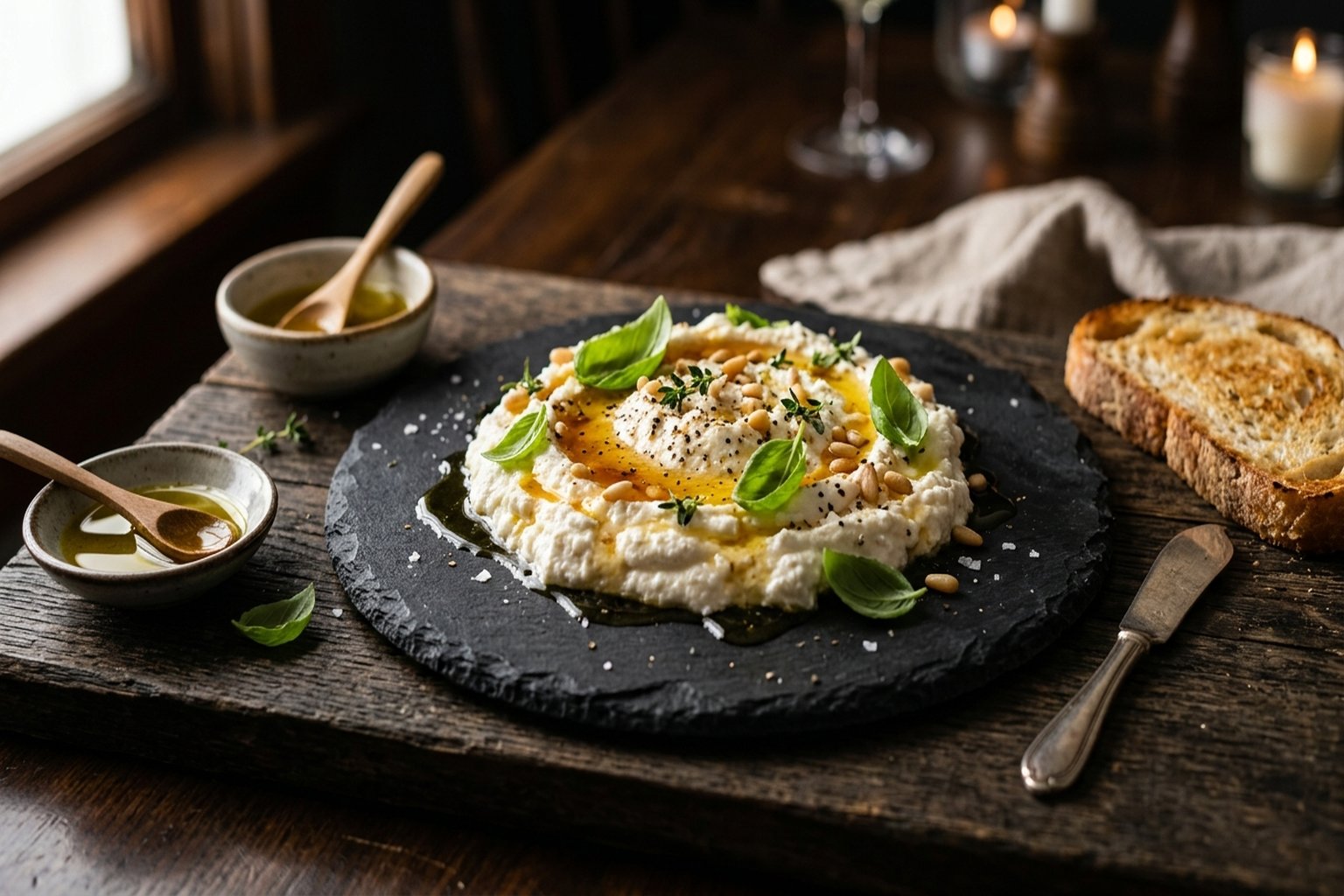
Homemade ricotta is a revelation: warm, creamy, and delicately sweet in a way the tub from the grocery store never is. The process is simpler than it sounds — heat milk with a splash of acid, wait for the curds to separate, and strain. That's it. What you get is a fresh cheese that's pillowy and spreadable on toast, swirled into pasta, or spooned over roasted vegetables. Try it in our Blueberry Lemon Ricotta Pancakes or dolloped on Tomato Bruschetta.
Snacks · Vegetarian, Gluten-free, How-To • 35 min
Ingredients
- 8 cups (½ gallon) whole milk, not ultra-pasteurized
- 1 cup heavy cream
- 1½ teaspoons kosher salt
- 3 tablespoons fresh lemon juice (from 1–2 lemons) or distilled white vinegar
Get Our Free 5-Ingredient Summer Dinners PDF
10 effortless recipes with 5 ingredients or fewer — delivered to your inbox, plus one thoughtful recipe every week.
Steps
- Line a large fine-mesh strainer with 3–4 layers of cheesecloth and set it over a deep bowl. You want enough overhang to gather the cloth later.
- Pour the milk, cream, and salt into a large heavy-bottomed pot or Dutch oven. Attach a thermometer to the side of the pot. Heat over medium heat, stirring occasionally with a wooden spoon to prevent scorching, until the mixture reaches 185°F — it should be steaming and foamy around the edges but not boiling. This takes about 8–10 minutes.
- Remove the pot from the heat. Pour in the lemon juice and stir gently with a folding motion — just 2 or 3 strokes to distribute the acid evenly. You'll see curds begin to separate from the whey almost immediately. Let the pot sit undisturbed for 10 minutes. The curds will consolidate into a thick, cloudy mass and the whey will turn clear and yellowish.
- Using a slotted spoon or spider skimmer, gently transfer the curds into the prepared cheesecloth-lined strainer. (Pouring the whole pot through works too, but spooning gives you more control.) Let the ricotta drain until it reaches the consistency you like — 5 minutes for a loose, creamy spread; 15–20 minutes for a firmer, scoopable cheese. The longer it drains, the denser it becomes.
- Gather the corners of the cheesecloth and twist gently to squeeze out any remaining whey if you want a firmer texture. Transfer the ricotta to a bowl or airtight container. Taste and add a pinch more salt if needed. Serve warm or at room temperature.
Tips & Variations
Make Ahead
Ricotta can be made up to 5 days ahead. Keep refrigerated in an airtight container. Bring to room temperature before serving for the best texture and flavor — cold ricotta loses its creaminess.
Storage
Store in an airtight container in the refrigerator for up to 5 days. The ricotta will release some whey as it sits — simply pour it off or stir it back in for a looser consistency. Do not freeze — the texture turns grainy.
Substitutions
Distilled white vinegar produces a clean, neutral flavor; lemon juice adds a subtle citrus note. Both work equally well. For a richer result, use all whole milk and skip the cream. Goat's milk makes a tangier, more complex ricotta. Stir in fresh herbs, lemon zest, or cracked black pepper after draining for a flavored spread.
Reviews
Reviews coming soon! In the meantime, let us know what you think of this recipe.