Cottage-Cheese Protein Pancakes
Cottage cheese disappears into pancake batter once you blend it smooth — it adds the same tender richness as ricotta but with more protein and a subtle tang that plays beautifully against maple syrup. Keep the heat moderate and give these a beat longer than regular pancakes; the extra protein and moisture mean they set more slowly, and rushing them leaves a raw center. Don't overmix once the wet and dry come together — a few lumps of flour are exactly what keep the crumb tender. Make a double batch and freeze the extras for school-morning breakfasts.
Breakfast · High-protein, Vegetarian • 25 min
Nutrition (per serving)340Calories·10gFat·48gCarbs·15gProtein
Per serving. Values are approximate and calculated from USDA FoodData Central.
Ingredients
- 1 cup (226g) full-fat (4%) cottage cheese, at room temperature
- 2 large eggs, at room temperature
- ¾ cup (180ml) whole milk, plus more as needed
- 1 teaspoon vanilla extract
- 1½ cups (190g) all-purpose flour
- 2 tablespoons granulated sugar
- 2 teaspoons baking powder
- ½ teaspoon baking soda
- ½ teaspoon kosher salt
- Unsalted butter, for the griddle
- Maple syrup, butter, and fresh berries, for serving
Get Our Free 5-Ingredient Summer Dinners PDF
10 effortless recipes with 5 ingredients or fewer — delivered to your inbox, plus one thoughtful recipe every week.
Steps
- Add the cottage cheese, eggs, milk, and vanilla to a blender or food processor and blend until completely smooth, 30 to 45 seconds — there should be no visible curds. This is what keeps the pancakes tender instead of dotted with cheesy pockets.
- In a large bowl, whisk together the flour, sugar, baking powder, baking soda, and salt until combined.
- Pour the wet cottage-cheese mixture into the dry ingredients and stir with a rubber spatula until just barely combined — streaks and small lumps of flour are fine. Overmixing makes tough pancakes. The batter will be thick but pourable; if it's too stiff to scoop, stir in milk a tablespoon at a time.
- Let the batter rest for 5 minutes while you heat the griddle. This gives the baking powder time to activate and the flour time to hydrate.
- Heat a 12-inch nonstick skillet or griddle over medium heat. Add a pat of butter and swirl to coat. When the butter stops foaming, drop ¼-cup portions of batter onto the griddle, spacing them apart. Gently nudge each into a round — the batter is thick.
- Cook until bubbles appear across the surface and the edges look set, about 3 to 4 minutes — a beat longer than regular pancakes. Flip carefully and cook until the second side is golden and the center springs back when pressed, 2 to 3 minutes more. Adjust the heat between batches so the butter doesn't burn.
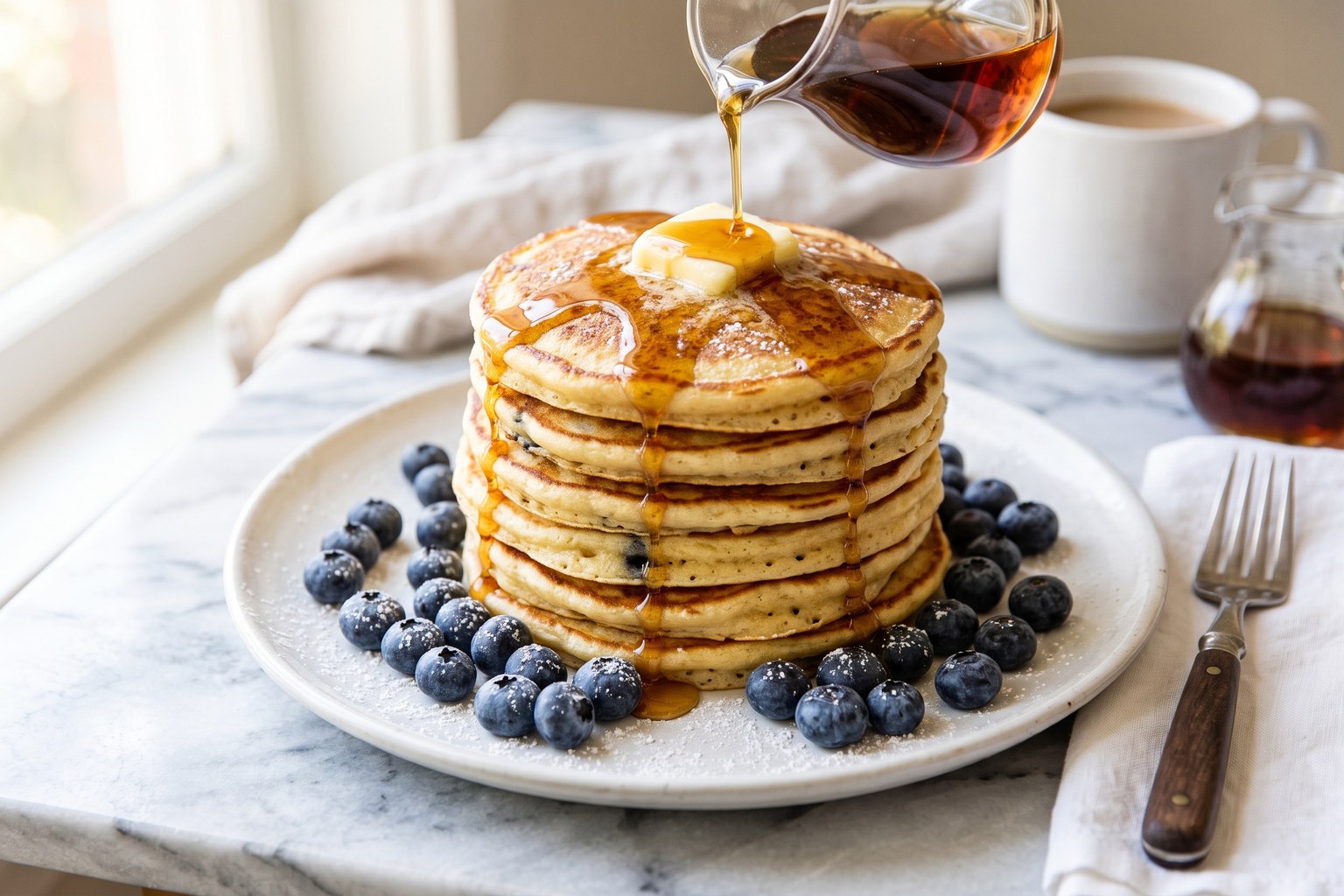
- Serve immediately in stacks with butter, a pour of warm maple syrup, and fresh berries.
Tips & Variations
Make Ahead
The dry ingredients can be whisked together and stored in an airtight container for up to a week. The cottage-cheese mixture can be blended the night before and refrigerated — whisk before using. Cooked pancakes freeze beautifully between layers of parchment.
Storage
Refrigerate cooked pancakes in an airtight container for up to 3 days. Reheat in a 350°F oven for 5 to 7 minutes or in a toaster. Freeze in a single layer, then stack with parchment between, for up to 1 month; reheat straight from frozen in a toaster or oven.
Substitutions
Low-fat (2%) cottage cheese works but makes a slightly thinner batter — add the milk a little at a time until the consistency looks right. For a dairy-free version, use a thick plant-based yogurt in place of the cottage cheese and oat milk in place of whole milk; the texture will be slightly different but still tender. Fold in a cup of blueberries or chocolate chips before cooking, or add a teaspoon of cinnamon and a pinch of nutmeg for a fall-spiced stack. A scoop of vanilla or unflavored protein powder can replace ¼ cup of the flour for an even bigger protein bump — add an extra splash of milk if the batter thickens.
Nutrition
Per serving: 3 pancakes
Reviews
Reviews coming soon! In the meantime, let us know what you think of this recipe.