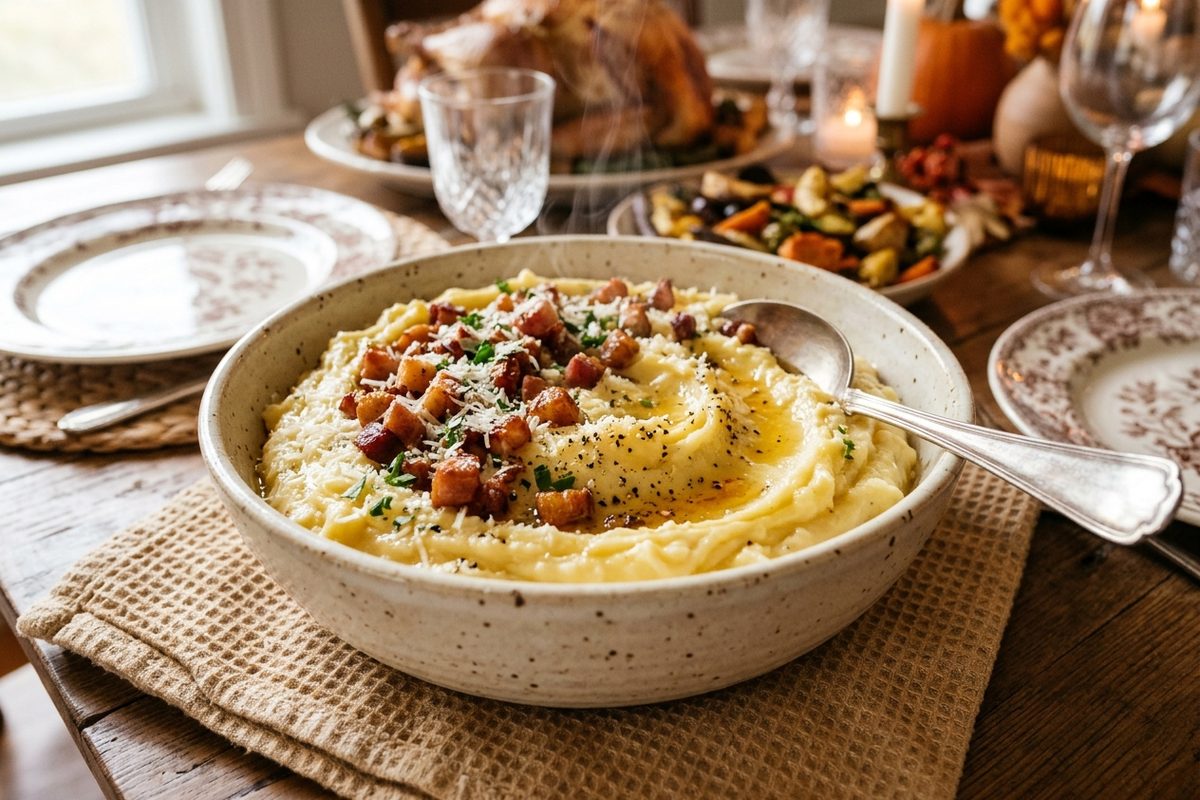
Carbonara Mashed Potatoes
Carbonara's genius was never the pasta — it was the egg, folded into a hot starch off the heat so it thickens into a glossy sauce instead of scrambling. This mash borrows that exact move: riced potatoes, warm but never bubbling, take a tempered yolk and a double hit of Parmesan and Pecorino and turn silky, with crisp guanciale or pancetta and the fat it renders doing the work that cream usually does. It's the Thanksgiving side that reads as pure comfort but lands somewhere richer — set it next to our Cajun Butter Turkey and Classic Make-Ahead Herb Stuffing, or serve it as the porkier, more indulgent sibling to our Brown Butter Garlic Confit Mashed Potatoes.
Sides · Gluten-Free, Thanksgiving, Make-Ahead • 50 min
Nutrition (per serving)410Calories·24gFat·36gCarbs·16gProtein
Per serving. Values are approximate and calculated from USDA FoodData Central.
Ingredients
- For the potatoes:
- 3½ pounds Yukon Gold potatoes, peeled and cut into 1½-inch chunks
- 1 tablespoon kosher salt, for the cooking water, plus more to taste
- For the carbonara:
- 6 ounces pancetta or guanciale, cut into ¼-inch dice
- 6 large egg yolks
- 3 ounces Parmigiano-Reggiano, finely grated (about 1 cup), plus more for serving
- 2½ ounces Pecorino Romano, finely grated (about ¾ cup), plus more for serving
- 1½ teaspoons coarsely cracked black pepper, plus more for finishing
- ½ cup whole milk or heavy cream, warmed
- For serving:
- 2 tablespoons reserved rendered pancetta or guanciale fat, for drizzling
- ¼ teaspoon flaky sea salt, for finishing
Get Our Free 5-Ingredient Summer Dinners PDF
10 effortless recipes with 5 ingredients or fewer — delivered to your inbox, plus one thoughtful recipe every week.
Steps
- Cook the potatoes: Place the potatoes in a large pot and cover with cold water by 2 inches. Stir in the 1 tablespoon salt, bring to a boil over high heat, then reduce to a simmer and cook until the potatoes are easily pierced with a fork, 15 to 18 minutes. Scoop out and reserve ¾ cup of the starchy cooking water, then drain the potatoes and let them sit in the colander for 2 minutes to steam off excess moisture.
- Crisp the pork: While the potatoes cook, set a medium skillet over medium heat. Add the diced pancetta or guanciale and cook, stirring occasionally, until the fat has rendered and the pieces are deeply golden and crisp, 6 to 8 minutes. Spoon the crisp bits onto a plate and pour the rendered fat into a small heatproof bowl; reserve both.
- Rice the potatoes: Pass the hot potatoes through a ricer or food mill back into the still-warm pot. No ricer? Mash by hand with a potato masher — ricing gives the silkiest, fluffiest result, but a light hand mashing works too.
- Loosen the mash: Fold the warm milk or cream and 2 tablespoons of the reserved pork fat into the potatoes until smooth and glossy. If the mash looks thick, loosen it with a splash of the reserved starchy water — you want it just shy of how loose you'd like it to finish, because the yolk and cheese will thicken it further.
- Temper the yolks: Whisk the egg yolks in a medium bowl with half of the cracked pepper. Ladle about ½ cup of the warm potato mixture into the yolks, whisking constantly — this tempers the yolks so they'll thicken the mash instead of scrambling. Repeat once more, then scrape the warmed yolk mixture back into the pot and fold it through. Work quickly and off the heat; the potatoes should be warm, never bubbling.
- Melt in the cheese: Off the heat, add the grated Parmigiano-Reggiano and Pecorino Romano a handful at a time, folding gently until the cheese melts into a glossy, silky mash. Resist the urge to put it back on the burner — too much direct heat will make the cheese seize and the yolk scramble. If it stiffens, loosen it with another splash of warm starchy water.
- Season and serve: Taste and season with the remaining cracked pepper and salt. Pile the mash into a warm serving bowl, scatter the crisp pancetta or guanciale over the top, and finish with a drizzle of the remaining rendered fat, a snowfall of extra cheese, a few more cracks of pepper, and the flaky sea salt. Serve immediately while warm — around 150°F to 160°F — and not a moment later.
Tips & Variations
Make Ahead
The egg is what makes this mash, and the egg needs to go in at the last minute — tempering it into warm potatoes right before serving is what gives you silk instead of scrambled bits, so plan for that. To get ahead, do the heavy lifting a day early: cook and rice the potatoes, crisp and reserve the pork and its fat, and refrigerate everything separately. About 30 minutes before serving, warm the potatoes gently — a double boiler or a slow cooker on 'keep warm' is the safe move, never direct high heat — then continue with the tempering and the cheese. Once finished, the mash holds over a double boiler or in a slow cooker on 'keep warm' for up to 1 hour; stir occasionally and loosen with a splash of warm milk if the surface starts to set.
Storage
Refrigerate leftovers in an airtight container for up to 3 days. The egg and cheese will have set the mash up firm, so reheat it gently: warm in a saucepan over low heat with a splash of milk or the reserved starchy water, folding until it loosens and just heats through, then shower with fresh cheese and pepper before serving. Skip a hard boil and keep the microwave on low — the yolks are gently cooked, and aggressive heat turns the mash grainy. Freezing isn't recommended; the emulsion separates and the potatoes go watery on the thaw.
Substitutions
Guanciale is the traditional choice and the richest; pancetta is easier to find and just as good, and thick-cut bacon works in a pinch — blot off the excess fat before folding it in so the mash doesn't turn greasy. For the cheese, the classic split is Parmesan for nutty melt and Pecorino for salt and bite — go all-Parmesan for a milder, rounder mash, or all-Pecorino for something sharper, and adjust the finishing salt accordingly. Swap the whole milk for heavy cream to go richer, or use warm unsweetened oat milk plus an extra spoon of the reserved pork fat for a lighter hand. There's no true dairy-free path here, since the egg and cheese are the whole point — but leave out the milk and fold in an extra 2 tablespoons of the rendered fat if you want to lean harder into the pork. Prefer no egg? Skip the yolks and add an extra splash of warm milk; the mash will be looser and less glossy, but still good.
Nutrition
Per serving: ⅛ of the recipe (about 1 cup)
Reviews
Reviews coming soon! In the meantime, let us know what you think of this recipe.