Classic Make-Ahead Herb Stuffing
Great stuffing comes down to one decision most recipes skip: the bread has to be dry before it ever meets the custard. Fresh bread soaks up the broth like a sponge and turns to mush; bread that's been toasted in a low oven drinks the seasoned stock in slowly, so every cube goes custardy at the center while the top stays shatteringly crisp. I start with a good sourdough or French loaf — you want real structure and a little tang, not presliced sandwich bread — and toast the cubes until they're bone-dry but barely colored. From there the work goes fast: soften celery and onion in a generous amount of butter, bloom the herbs in that fat so the sage and thyme perfume the whole pan, then pour everything over the bread with beaten eggs and a good stock. The eggs are the quiet trick that binds this into a single cohesive thing instead of a pile of croutons. The real gift, though, is that it's built to be made ahead — assemble the whole dish the day before, hold it in the fridge overnight, and bake it off while the turkey rests. That overnight rest is an improvement, not a compromise: the flavors knit together and the top crisps even harder. If you're team 'stuffing must bake inside the bird,' I'd gently steer you away — the bread steams instead of crisping, and by the time the center is food-safe the turkey is overdone. Bake it in a dish; your turkey will thank you. If you like this one, our Roasted Garlic Mashed Potatoes and Garlic Green Beans round out the same Thanksgiving plate.
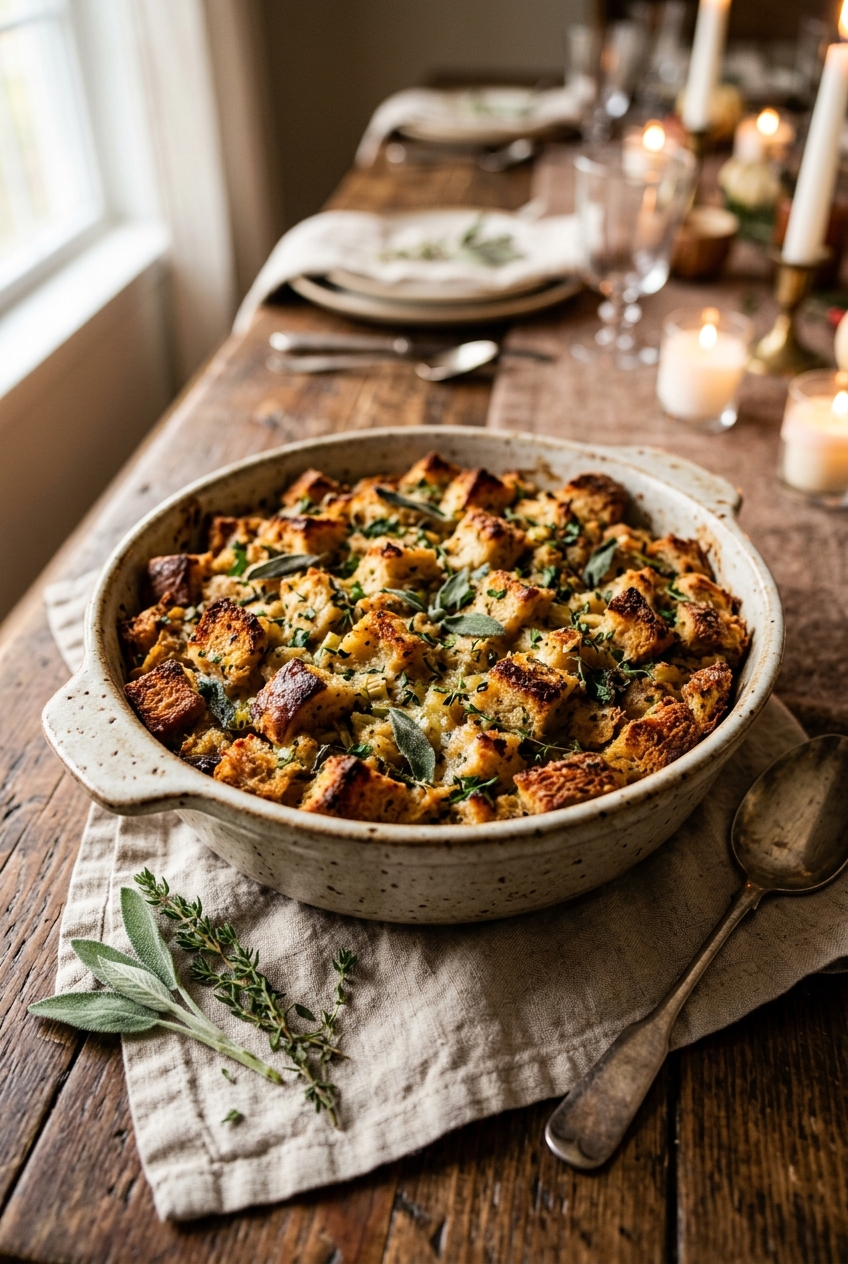
Side · Make-Ahead, Thanksgiving, Vegetarian • 1 hr 10 min
Nutrition (per serving)280Calories·15gFat·29gCarbs·7gProtein
Per serving. Values are approximate and calculated from USDA FoodData Central.
Ingredients
- For the bread:
- 1 pound sourdough or French bread, cut into ¾-inch cubes (about 10 cups)
- For the aromatics:
- 10 tablespoons unsalted butter, plus more for the dish
- 1 large yellow onion, finely chopped (about 1¾ cups)
- 3 celery stalks, finely chopped (about 1½ cups)
- 1½ teaspoons kosher salt, divided
- ¾ teaspoon freshly ground black pepper
- 2 garlic cloves, minced
- 2 tablespoons fresh sage, finely chopped
- 1 tablespoon fresh thyme leaves, chopped
- 1 teaspoon fresh rosemary, finely chopped
- For the custard:
- 2½ cups low-sodium chicken, turkey, or vegetable stock
- 2 large eggs
- ¼ cup chopped fresh flat-leaf parsley, plus more for serving
Get Our Free 5-Ingredient Summer Dinners PDF
10 effortless recipes with 5 ingredients or fewer — delivered to your inbox, plus one thoughtful recipe every week.
Steps
- Dry the bread: Preheat the oven to 300°F. Spread the bread cubes across two rimmed baking sheets and bake until dry and crisp but not browned, 20 to 25 minutes, tossing once halfway through. (If your bread is already a few days old and genuinely stale, you can skip this and move on.) Let the cubes cool completely, then tip them into a very large bowl. Dried cubes can be made up to 3 days ahead and stored in an airtight bag at room temperature.
- Cook the aromatics: Melt the butter in a large skillet over medium heat. Add the onion, celery, and ½ teaspoon of the salt and cook, stirring occasionally, until soft and translucent but not browned, 8 to 10 minutes. Stir in the garlic, sage, thyme, and rosemary and cook until fragrant, about 1 minute. Scrape the whole mixture, butter and all, into the bowl with the bread.
- Build the custard: In a medium bowl, whisk together the stock, eggs, the remaining 1 teaspoon salt, the pepper, and the parsley until smooth.
- Moisten the bread: Pour the custard over the bread and vegetables and fold gently with a rubber spatula until every cube is evenly coated. Let it sit for 10 minutes so the bread drinks up the liquid, folding once or twice more. The bread should feel damp and slightly squishy but never soupy — if a handful still feels dry or crumbly, drizzle in a little more stock, a few tablespoons at a time.
- Assemble: Butter a 9×13-inch baking dish. Scrape the stuffing into the dish and spread it into an even layer, but don't pack it down — loose cubes mean a crisper top. Cover tightly with foil.
- Make ahead: Refrigerate the assembled, unbaked stuffing for up to 24 hours. Pull it from the fridge while the oven preheats so it isn't ice-cold going in. (To bake right away, skip straight to the next step.)
- Bake: Preheat the oven to 375°F. Bake the covered stuffing for 30 minutes, then uncover and bake until the top is deeply golden and crisp and the edges are bubbling, 20 to 25 minutes more. If you like extra crunch, drizzle the top with a tablespoon of melted butter before that final uncovered stretch.
- Rest and serve: Let the stuffing rest for 10 minutes out of the oven so it sets up and cuts cleanly. Shower with extra parsley and serve hot.
Tips & Variations
Make Ahead
This stuffing is designed to be made ahead, and it's genuinely better for it. Assemble the entire dish through step 5 (dried bread, cooked aromatics, custard, all folded and packed into the buttered dish), cover tightly with foil, and refrigerate for up to 24 hours. The overnight rest lets the broth, herbs, and butter soak fully into the bread, so the cubes go custardy in the center while the top still crisps in the oven. Bake it straight from the fridge, adding about 10 minutes to the covered portion. You can also get ahead in stages: dry and cube the bread up to 3 days ahead, and cook the aromatics up to 2 days ahead (cool, then refrigerate in a covered container) — combine everything and bake when you're ready.
Storage
Refrigerate leftovers in an airtight container for up to 4 days. Reheat in a covered dish at 350°F for 15 to 20 minutes, or in a skillet with a splash of stock to re-soften, until hot through. To re-crisp the top, remove the cover for the last 5 minutes. Leftover stuffing also freezes well: freeze in a sealed container or zip-top bag for up to 3 months, thaw overnight in the fridge, and reheat covered, adding a little stock if it looks dry.
Substitutions
Any sturdy, day-old bread works in place of sourdough — a crusty French or Italian loaf, a rustic country loaf, or even a mix of odds and ends. Dried herbs can stand in for fresh: use about 2 teaspoons dried sage, 1 teaspoon dried thyme, and ½ teaspoon dried rosemary (dried herbs are more concentrated, so scale back). For a cornbread-style stuffing, swap half the bread cubes for crumbled cornbread. Stir in 8 ounces of browned, crumbled Italian sausage or 1 cup of toasted chopped pecans for a heartier dish, or fold in a cup of dried cranberries and a diced apple for a sweet-savory note. To make it vegetarian, use vegetable stock; to make it dairy-free and egg-free, swap the butter for olive oil and replace the eggs with an extra ½ cup of stock plus 1 tablespoon of ground flax whisked with 3 tablespoons of water. For a gluten-free version, use a sturdy gluten-free loaf — it toasts and soaks up stock beautifully.
Nutrition
Per serving: ⅛ of the recipe (about 1 cup)
Reviews
Reviews coming soon! In the meantime, let us know what you think of this recipe.