Crispy Beef Tallow Sheet-Pan Dinners
Beef tallow is the unsung hero of the sheet pan: its roughly 400°F smoke point lets it take the high heat that crisps beef and caramelizes root vegetables without breaking down or turning acrid the way butter would. Toss cubes of sirloin with parsnips, carrots, and sweet potato in a few spoonfuls of the rendered fat and the whole pan comes out lacquered, deeply browned, and faintly beefy. Pearled farro — a prebiotic grain loaded with resistant starch and about 7 grams of fiber per cooked cup — turns it into a dinner that actually keeps you full, and the root vegetables pile on another wallop of fiber and slow-burning carbs. One pan, one pot, and the kind of cozy fall dinner that feels far more indulgent than its ingredient list lets on.
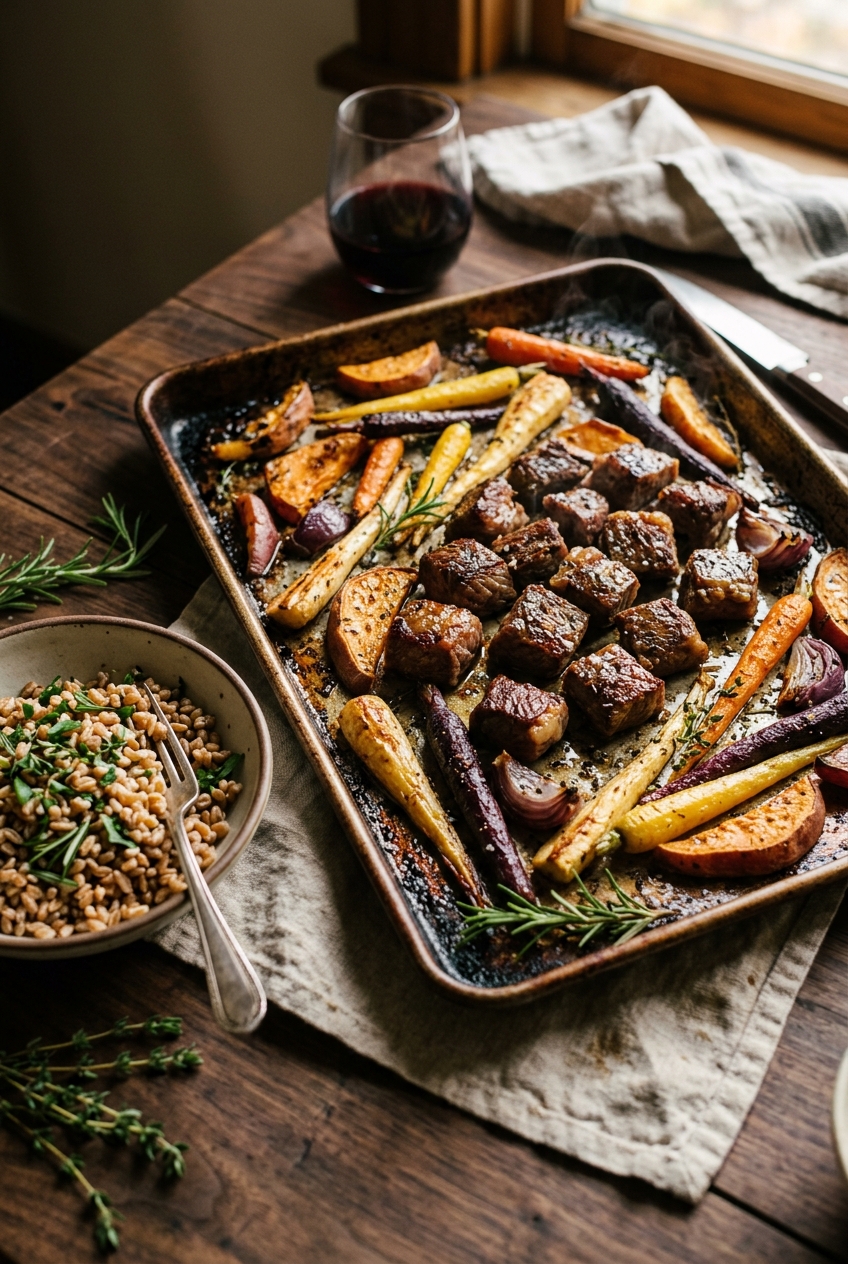
Dinner · One-Pan, High-Protein, Fiber-Rich · 45 min
Nutrition (per serving)680Calories·29gFat·56gCarbs·43gProtein
Per serving. Values are approximate and calculated from USDA FoodData Central.
Ingredients
- For the farro:
- 1 cup pearled farro, rinsed
- 2½ cups low-sodium beef broth or water
- 1 bay leaf
- ½ teaspoon kosher salt
- For the sheet pan:
- 1½ pounds sirloin steak or flat-iron steak, cut into 1-inch cubes
- 3 tablespoons beef tallow, melted, divided
- 3 medium carrots, peeled and cut into ½-inch chunks
- 2 medium parsnips, peeled and cut into ½-inch chunks
- 1 medium sweet potato (about 12 ounces), scrubbed and cut into ½-inch cubes
- 1 small red onion, cut into ½-inch wedges
- 4 garlic cloves, smashed
- 4 to 5 sprigs fresh thyme, plus more for serving
- 2 sprigs fresh rosemary
- 1½ teaspoons kosher salt, divided
- ¾ teaspoon freshly ground black pepper, divided
- 1 teaspoon smoked paprika
- For finishing:
- 2 tablespoons chopped fresh parsley
- 1 tablespoon apple cider vinegar or fresh lemon juice
- Flaky sea salt, for finishing
Get Our Free 5-Ingredient Summer Dinners PDF
10 effortless recipes with 5 ingredients or fewer — delivered to your inbox, plus one thoughtful recipe every week.
Steps
- Cook the farro: Combine the rinsed farro, broth (or water), bay leaf, and ½ teaspoon salt in a medium saucepan. Bring to a boil over high heat, then reduce to low, cover, and simmer until the farro is tender but still pleasantly chewy, 20 to 25 minutes. Drain off any excess liquid, discard the bay leaf, and keep the farro covered off the heat.
- Heat the oven and start the vegetables: Preheat the oven to 425°F with a rack in the center. Pat the beef cubes dry with paper towels — dry meat is what browns. In a large bowl, toss the carrots, parsnips, sweet potato, and red onion with 2 tablespoons of the melted tallow, 1 teaspoon of the salt, ½ teaspoon of the pepper, and the smoked paprika until evenly coated. Spread the vegetables in a single layer on a large rimmed sheet pan and roast for 15 minutes.
- Season the beef: While the vegetables roast, toss the beef cubes in the same bowl with the remaining 1 tablespoon of tallow, the remaining ½ teaspoon salt, ¼ teaspoon pepper, the smashed garlic, thyme, and rosemary. Beef tallow can handle the high oven heat — its ~400°F smoke point means the fat coating the food stays below its smoking temperature — but if you render tallow from scratch, do it low and slow and never leave hot fat unattended.
- Add the beef and finish roasting: Pull the pan from the oven and scatter the beef cubes over and between the vegetables in an even layer (don't pile them up or they'll steam instead of sear). Return to the oven and roast until the vegetables are deeply caramelized and the beef reads 130°F to 135°F on an instant-read thermometer for medium-rare — or 140°F for medium — 12 to 15 minutes. The beef will carry over a few degrees as it rests.
- Rest and serve: Remove the pan from the oven, tent loosely with foil, and let everything rest for 5 minutes. Discard the herb sprigs and garlic cloves if you like. Fluff the farro and spoon it onto a platter or into shallow bowls, then top with the beef and vegetables. Drizzle with the vinegar (or lemon juice), scatter with parsley, and finish with a pinch of flaky sea salt and a few fresh thyme leaves.
Tips & Variations
Make Ahead
Cook the farro up to 3 days ahead and refrigerate; reheat it with a splash of broth. Cube the beef and chop the vegetables the night before and store them separately in the fridge — just pat the beef dry again before roasting so it browns properly. The sheet pan itself is best roasted just before serving so the beef stays pink and the vegetables stay crisp-edged, but the whole dish reheats beautifully for next-day lunches.
Storage
Refrigerate leftovers in an airtight container for up to 4 days. Reheat gently in a 350°F oven or in a skillet with a splash of broth to re-crisp the edges; the microwave works in a pinch but softens the crust. The farro and the beef-and-vegetable mix can be stored together or separately. Freeze the beef and vegetable portion for up to 2 months; the farro freezes well on its own too.
Substitutions
No tallow on hand? Render your own: save the trimmings from the steak, chop them small, and melt them in a saucepan over the lowest heat until the solids turn golden, then strain through a fine-mesh sieve — go low and slow and watch it carefully, because hot fat splatters and can burn. Otherwise use an equal amount of a neutral high-smoke-point fat such as avocado oil or ghee; duck fat or bacon fat add their own richness. Farro can be swapped for pearled barley, wheat berries, or quinoa (quinoa is gluten-free and cooks faster — note that farro and barley both contain gluten). Use any quick-cooking, tender beef cut in place of the sirloin, such as flat-iron, hanger, or strip steak, or swap in 1½ pounds of boneless, skinless chicken thighs and roast until they reach 165°F. Almost any sturdy root vegetable works here — rutabaga, turnip, beets, or celery root in place of the parsnips, and baby potatoes can stand in for the sweet potato.
Nutrition
Per serving: About 1½ cups
Reviews
Reviews coming soon! In the meantime, let us know what you think of this recipe.