Prime Rib Roast (Standing Rib Roast)
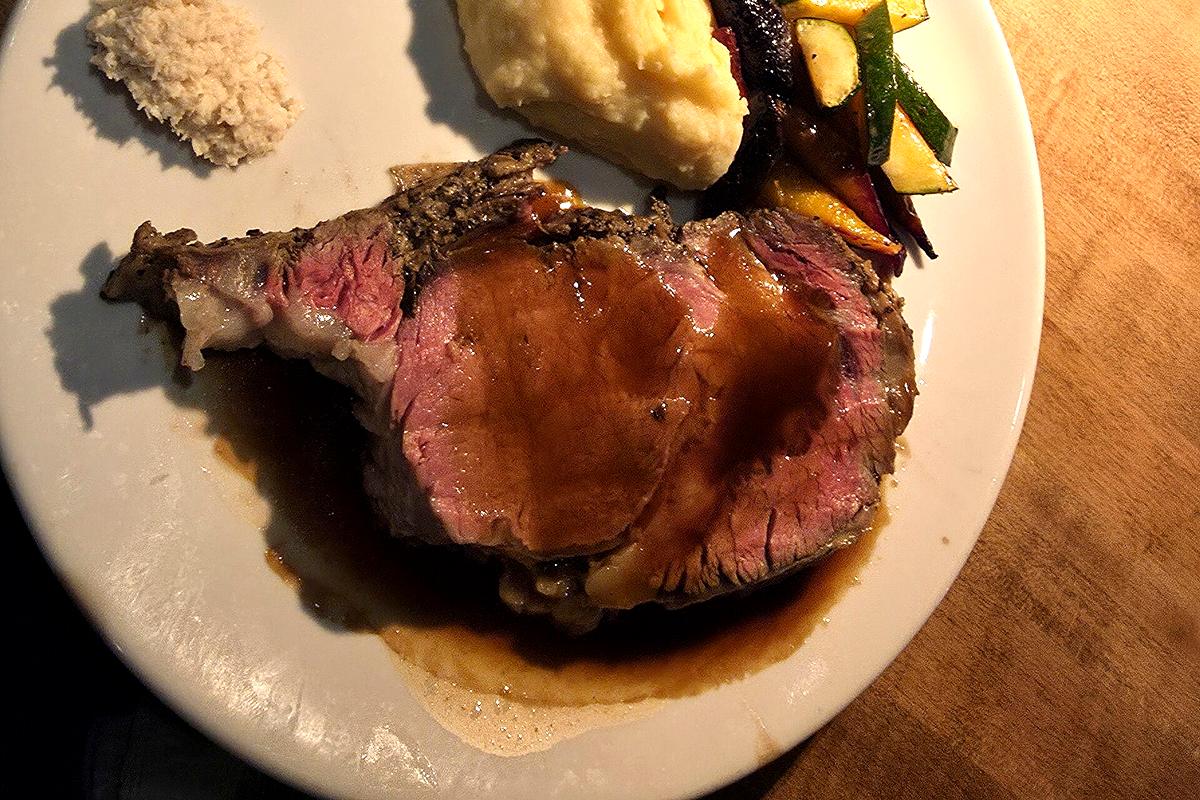
Prime rib is the centerpiece that intimidates people for exactly one reason: it's expensive, and no one wants to ruin it. The fix is to stop guessing and start trusting a thermometer. This recipe uses the reverse-sear method, which is the closest thing to foolproof there is for a large roast — instead of blasting it with high heat and hoping the middle catches up, you roast it gently at 250°F until the center hits your target, let it rest, then finish it with a quick blast of high heat to set the crust. The result is the thing most prime ribs never achieve: a rosy pink center that runs all the way to the edges, with no gray ring of overcooked meat. The herb crust — mustard, garlic, rosemary, and thyme — is what turns that mahogany exterior into the best bite on the plate. The one non-negotiable is a reliable instant-read thermometer; without it you are cooking by feel, and with a roast this size, feel lies. If you're building the full holiday table around it, set it beside our Brown Sugar Glazed Ham for a surf-and-turf-of-beef-and-pork spread, with Brown Butter Garlic Confit Mashed Potatoes and Green Bean Casserole on the side.
Dinner · Beef, Reverse-Sear, High-Protein, Low-Carb • 4 hr
Nutrition (per serving)640Calories·50gFat·2gCarbs·42gProtein
Per serving. Values are approximate and calculated from USDA FoodData Central.
Ingredients
- For the roast:
- 1 standing rib roast (prime rib), 4 bones (8 to 9 pounds), chine bone removed and ribs tied
- 2½ tablespoons kosher salt (about 1 teaspoon per pound)
- For the herb crust:
- 2 tablespoons Dijon mustard
- 2 tablespoons olive oil or softened unsalted butter
- 4 garlic cloves, finely minced or grated
- 2 tablespoons fresh rosemary leaves, finely chopped
- 2 tablespoons fresh thyme leaves
- 2 teaspoons freshly ground black pepper
- For the pan (optional, for au jus):
- 1 cup beef bones or onion, carrot, and celery trimmings
- 2 cups low-sodium beef broth
Get Our Free 5-Ingredient Summer Dinners PDF
10 effortless recipes with 5 ingredients or fewer — delivered to your inbox, plus one thoughtful recipe every week.
Steps
- Dry-brine the roast (the day before, or at least 1 hour ahead): Pat the roast completely dry with paper towels, then season it generously all over with the kosher salt, pressing it into the meat and fat. Set the roast on a wire rack over a rimmed baking sheet and refrigerate it uncovered for up to 2 days — the salt seasons the meat all the way through and the dry air helps the exterior brown later. If you're short on time, a bare minimum of 1 hour salted at room temperature still makes a difference.
- Bring to room temperature and make the crust: Two hours before roasting, pull the roast from the fridge and let it sit on the counter so it comes to room temperature — a cold roast cooks unevenly. In a small bowl, stir together the Dijon mustard, olive oil or butter, garlic, rosemary, thyme, and black pepper into a thick paste.
- Slather the crust: Pat the roast dry once more (the salt will have drawn moisture to the surface), then smear the herb-mustard mixture all over the meat, fat cap, and both cut ends. Do this right before the roast goes in — the mustard and herbs should sit on the surface so they can brown into a crust, not soak in.
- Slow-roast low and slow: Heat the oven to 250°F with a rack in the lower third. Set the roast, fat side up, on a rack in a roasting pan (nestle the bones or vegetable trimmings underneath with the broth, if making au jus). Roast, undisturbed, until an instant-read thermometer inserted into the dead center of the eye reads 115°F for rare or 120°F for medium-rare — figure roughly 25 to 30 minutes per pound, about 3 to 3¼ hours for an 8-to-9-pound roast. Check early and often; temperature, not time, is the only reliable cue.
- Rest before the sear: Transfer the roast to a cutting board, tent it loosely with foil, and let it rest for 30 to 45 minutes. This is the reverse-sear's secret weapon — carryover cooking nudges the center up about 5°F, and the rest means the roast won't overcook in the final blast of heat. This rest can stretch up to 1½ hours, which makes it your make-ahead grace window.
- Sear the crust: Crank the oven to its highest setting — 500°F or 550°F. Return the roast to the oven, fat side up, and roast until the exterior is deeply browned, sizzling, and fragrant, 8 to 12 minutes. Watch it closely and go by color, not the clock; the crust should be mahogany and crackling, never blackened.
- Rest and check the temperature: Move the roast back to the cutting board and rest it, uncovered, for 15 minutes. Your final temperatures should read 120°F to 125°F for rare or 130°F to 135°F for medium-rare at the center. The USDA recommends cooking whole beef roasts to a minimum of 145°F with a 3-minute rest — if you or anyone at the table is in a higher-risk group, roast to 145°F instead; the meat will still be excellent.
- Carve and serve: Set the roast on a carving board with the ribs pointing down. Slice along the bones to remove the rack, then lay the roast on its side and cut it into thick, even slices against the grain. Arrange on a warm platter, spoon over any pan drippings or a quick au jus made from the roasting pan, and serve immediately.
Tips & Variations
Make Ahead
Prime rib rewards doing the prep ahead. Dry-brine the roast up to 2 days in advance — salt it, then refrigerate it uncovered on a rack, which seasons the meat and dries the surface for better browning. The herb-mustard crust can be mixed up to a day ahead and kept covered in the fridge. The real make-ahead gift is the rest between roasting and searing: once the roast hits 115°F to 120°F, it can hold at room temperature for up to 1½ hours, so you can time the final 8-to-12-minute sear to land exactly when guests sit down. Plan your timeline backward from the serve time — 2 hours to temper, about 3 hours to roast low, up to 1½ hours to rest, 10 minutes to sear, and 15 minutes to rest again.
Storage
Refrigerate leftover prime rib, sliced or whole, in an airtight container for up to 4 days, or freeze it tightly wrapped for up to 3 months. The key to reheating without ruining the rosy center is low heat: warm slices gently in a 250°F oven or a covered skillet with a splash of broth just until they reach 120°F, rather than blasting them. Save the bones and any drippings for stock, and refrigerate leftovers within 2 hours of serving to stay within food-safety guidelines.
Substitutions
A boneless rib roast works exactly the same way — figure 25 to 30 minutes per pound at 250°F and cook to the same internal temperatures; it will roast a touch faster without the bones. For a smaller gathering, ask the butcher for a 2-bone roast (about 4 pounds) and cut the roasting time roughly in half. Swap the rosemary for an equal measure of oregano or tarragon, stir a spoonful of prepared horseradish into the crust for heat, or use softened butter in place of the oil for a richer crust. Serve with a sharp horseradish cream on the side, and if you don't have a thermometer, pause and get one before you start — it's the one piece of equipment this recipe can't be done without.
Nutrition
Per serving: About 8 ounces prime rib (with crust)
Reviews
Reviews coming soon! In the meantime, let us know what you think of this recipe.