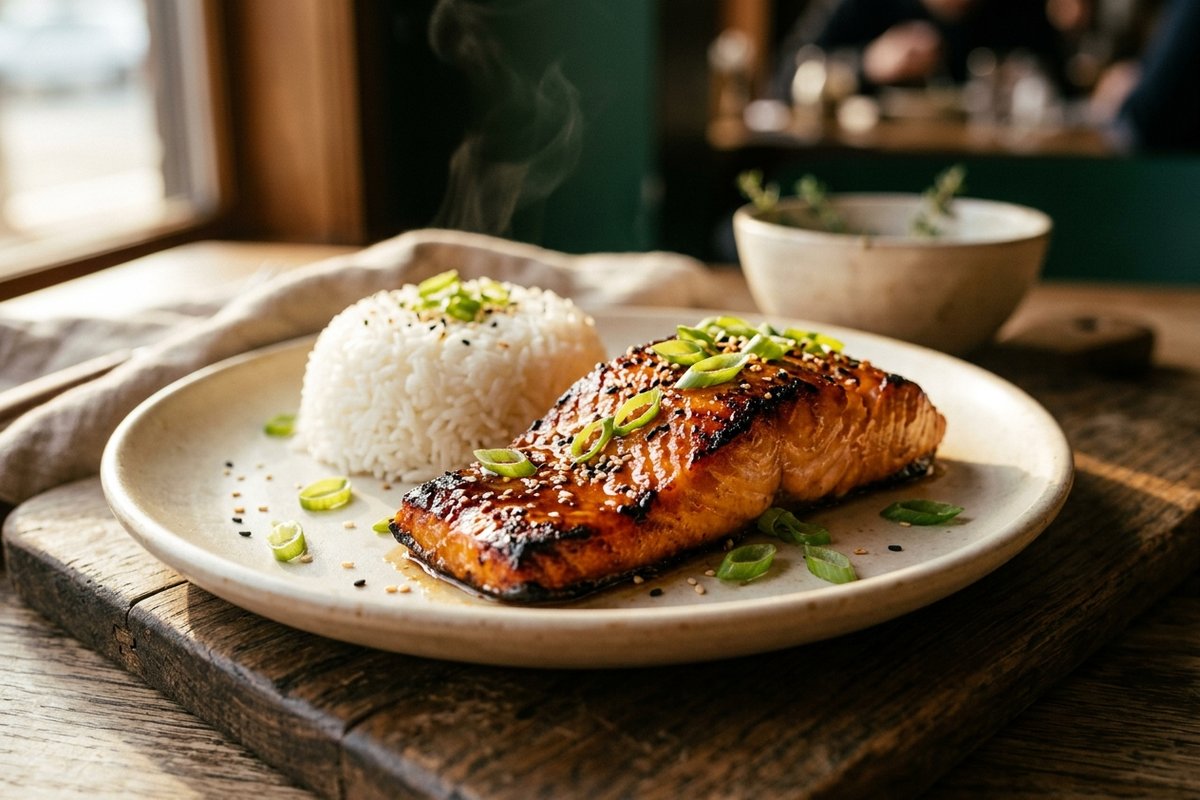
Miso-Maple Glazed Salmon
The glaze is the whole trick: white miso for savory depth, maple syrup for sweetness, and gochujang for a slow, creeping heat that lands just behind the sugar — sweet, savory, and gently spicy in a single lacquer. Broiling, not pan-searing, is what makes it work: the sugars caramelize into a glossy, charred-at-the-edges crust in the same few minutes the fish cooks through to 145°F, so you never risk a dry fillet. It's a 25-minute weeknight dinner that reads like something you'd order out, and it gives the sweet-savory salmon you already love a little fire. If you're chasing this same layered-heat energy, try our Apple-Soy Glazed Chicken, Gochujang-Miso Glazed King Oyster Mushrooms, or Maple-Roasted Butternut Harvest Salad.
Dinner · Fall, High-protein, Seafood • 25 min
Nutrition (per serving)430Calories·23gFat·15gCarbs·40gProtein
Per serving. Values are approximate and calculated from USDA FoodData Central.
Ingredients
- For the glaze:
- 3 tablespoons white miso paste
- 3 tablespoons pure maple syrup
- 1 tablespoon gochujang (Korean fermented chile paste)
- 1 tablespoon low-sodium soy sauce or tamari
- 1 tablespoon rice vinegar
- 1 teaspoon toasted sesame oil
- 1½ teaspoons grated fresh ginger (from a 1½-inch piece)
- 1 clove garlic, minced
- For the salmon:
- 4 (6-ounce) center-cut salmon fillets, skin-on
- Kosher salt
- 1 teaspoon neutral oil, such as grapeseed or avocado, for the pan
- For serving:
- Steamed jasmine or short-grain rice, for serving
- 2 scallions, thinly sliced
- 1 teaspoon toasted sesame seeds
- Lime wedges, for serving (optional)
Get Our Free 5-Ingredient Summer Dinners PDF
10 effortless recipes with 5 ingredients or fewer — delivered to your inbox, plus one thoughtful recipe every week.
Steps
- Make the glaze: In a small bowl, whisk together the miso, maple syrup, gochujang, soy sauce, rice vinegar, sesame oil, ginger, and garlic until completely smooth. Set aside.
- Position an oven rack about 6 inches from the broiler and preheat the broiler to high. Line a rimmed baking sheet with foil and lightly brush the foil with the neutral oil.
- Pat the salmon fillets dry with paper towels and season lightly all over with salt. Arrange them skin-side down on the prepared sheet, spaced so they aren't touching.
- Broil the salmon for 4 minutes to begin cooking and set the top.
- Brush about half of the glaze generously over the fillets. Return to the broiler and cook for 3 minutes.
- Brush the remaining glaze over the fillets. Broil until the glaze is deeply caramelized and bubbling at the edges and the thickest part of the fish registers 145°F on an instant-read thermometer (or flakes easily with a fork), 2 to 4 minutes more. Watch closely — the sugars go from glossy to burnt in a blink.
- Let the salmon rest on the sheet for 3 minutes; carryover cooking finishes the job while the glaze sets.
- Serve over steamed rice, spooning any glaze left in the pan over the top. Finish with scallions, sesame seeds, and a squeeze of lime if you like.
Tips & Variations
Make Ahead
The glaze can be whisked up to 5 days ahead and stored in a sealed jar in the refrigerator; stir it back together before using. Pat the salmon dry and let it sit at room temperature for 15 minutes before broiling so it cooks evenly — but don't glaze it in advance, or the sugar and miso will draw out moisture and the glaze will burn before the fish cooks through.
Storage
Refrigerate leftovers in an airtight container for up to 2 days. Gently reheat in a 275°F oven for 5 to 7 minutes, or flake the fish cold over rice or greens. The glaze won't re-caramelize, but the flavor deepens overnight.
Substitutions
Red or awase (mixed) miso can stand in for white — red is saltier and more intense, so start with 2½ tablespoons and taste. Use tamari and a gluten-free gochujang for a gluten-free version (many gochujang brands contain wheat, so check the label). Harissa or sambal oelek can replace the gochujang for a different heat profile; halve the amount if you're sensitive to heat. Honey works in place of maple syrup, though the flavor turns more floral than woodsy. No broiler? Roast at 425°F and brush on the glaze only in the last 5 minutes, watching closely. Steelhead trout or Arctic char are excellent substitutes for salmon.
Nutrition
Per serving: 1 salmon fillet with glaze (rice not included)
Reviews
Reviews coming soon! In the meantime, let us know what you think of this recipe.