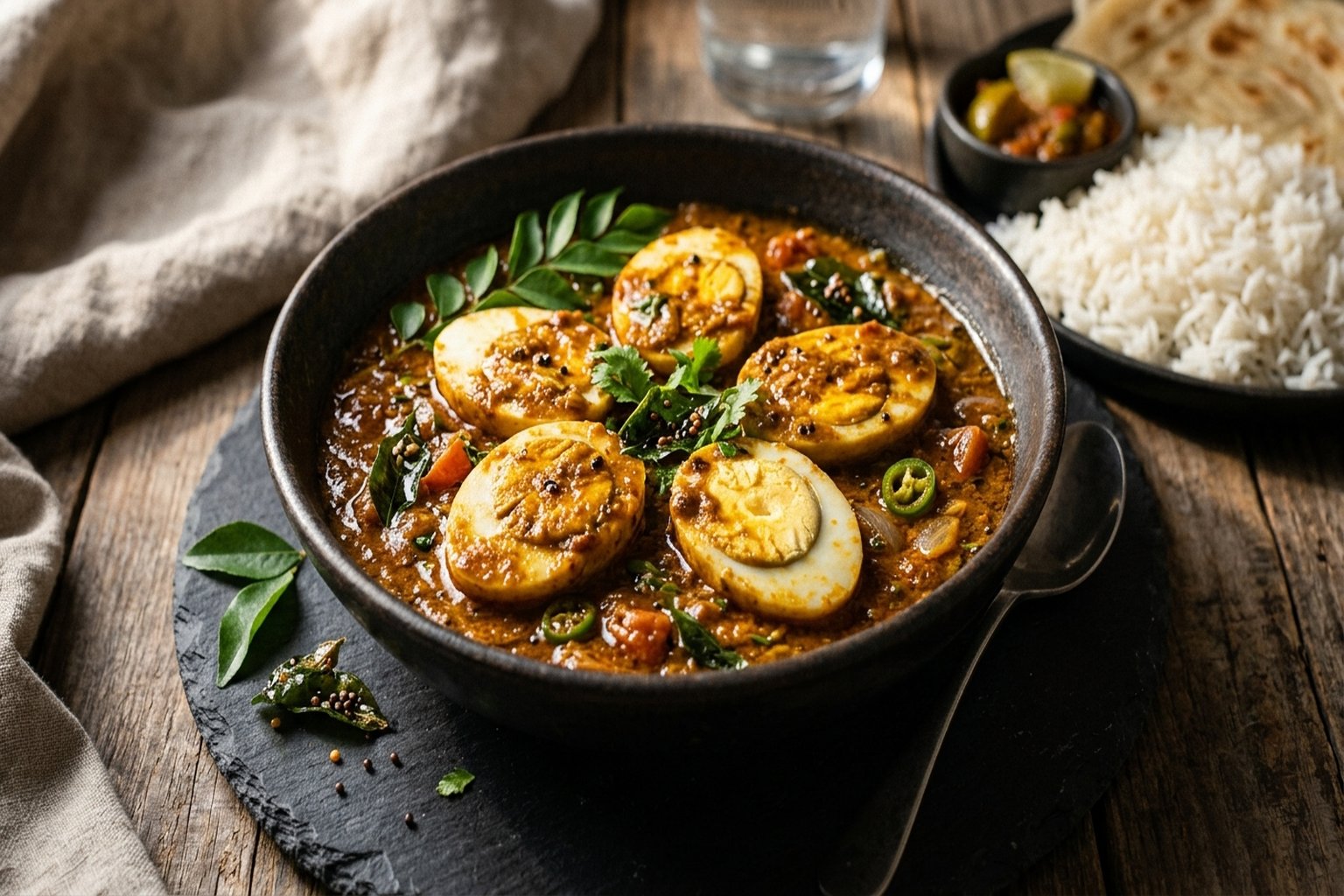
Kerala Egg Curry (Mutta Curry)
In Kerala, egg curry — mutta curry — is weeknight royalty: hard-boiled eggs in a fragrant, coconut-rich gravy that comes together faster than any meat curry but delivers just as much depth. The eggs are shallow-fried first, giving them a golden, craggy exterior that soaks up the spiced coconut-tomato sauce like a sponge. The tempering at the end — mustard seeds and curry leaves crackling in hot coconut oil — is non-negotiable; it's the aroma that pulls everyone to the table. Serve with steamed basmati rice or warm parotta, or pair with a cooling Gazpacho for a globe-spanning summer dinner.
Dinner · High-protein, Gluten-free, Indian · 30 min
Ingredients
- 6 large eggs
- 3 tablespoons coconut oil (or neutral vegetable oil), divided
- 1 large yellow onion, finely diced
- 2 teaspoons ginger-garlic paste (or 1 tsp each minced ginger and garlic)
- 2 green chilies (Indian or serrano), slit lengthwise
- 2 medium tomatoes, finely diced (or 1 cup canned crushed tomatoes)
- 1 teaspoon ground turmeric
- 2 teaspoons Kashmiri chili powder (or 1 tsp paprika + ½ tsp cayenne)
- 2 teaspoons ground coriander
- ½ teaspoon garam masala
- ½ teaspoon freshly ground black pepper
- 1 cup canned full-fat coconut milk, well shaken
- ½ cup water
- 1 teaspoon kosher salt, plus more to taste
- For the tempering (tadka): 1 tablespoon coconut oil, 1 teaspoon black mustard seeds, 12–15 fresh curry leaves, 2 dried red chilies (optional), ¼ teaspoon asafoetida (hing, optional)
- Steamed basmati rice or warm parotta, for serving
- Fresh cilantro, chopped, for garnish
- Lemon wedges, for serving
Get Our Free 5-Ingredient Summer Dinners PDF
10 effortless recipes with 5 ingredients or fewer — delivered to your inbox, plus one thoughtful recipe every week.
Steps
- Place the eggs in a medium saucepan and cover with cold water by 1 inch. Bring to a boil over high heat, then cover, remove from heat, and let stand for 10 minutes. Transfer to an ice bath and let cool completely. Peel and pat dry. Prick each egg 3–4 times with a fork (this helps the sauce penetrate).
- Heat 2 tablespoons coconut oil in a large skillet or kadai over medium heat. Add the peeled eggs and shallow-fry, turning gently with a spoon, until golden and blistered in spots — about 3–4 minutes total. Transfer to a plate and set aside. Don't skip this step; the craggy texture makes the dish.
- In the same skillet, add the remaining 1 tablespoon coconut oil over medium heat. Add the diced onion and cook, stirring occasionally, until golden brown and soft, about 6–8 minutes. Add the ginger-garlic paste and slit green chilies, and cook for 1 minute until fragrant.
- Add the diced tomatoes, turmeric, Kashmiri chili powder, coriander, garam masala, and black pepper. Cook, stirring frequently, until the tomatoes break down completely and the oil begins to separate from the mixture — about 5–7 minutes. The masala should be thick, glossy, and deeply fragrant.
- Pour in the coconut milk and water. Stir well and bring to a gentle simmer. Add the salt and let the gravy bubble gently for 5 minutes, allowing the flavors to meld and the sauce to thicken slightly.
- Gently lower the fried eggs into the simmering gravy. Spoon sauce over the tops and simmer for 3–4 minutes, letting the eggs absorb the spiced coconut gravy. Cut one egg in half to check — it should show a thin line of yellow-stained white where the sauce has penetrated.
- Make the tempering: In a small pan or butter warmer, heat 1 tablespoon coconut oil over medium-high heat until shimmering. Add the mustard seeds and let them sputter and pop (cover with a splatter screen if needed). Immediately add the curry leaves, dried red chilies (if using), and asafoetida. Swirl for 10–15 seconds until the curry leaves are crisp and fragrant. Pour the sizzling tempering over the egg curry — it should crackle dramatically.
- Garnish with chopped cilantro and serve immediately with steamed basmati rice or warm parotta. Pass lemon wedges at the table — a squeeze of lemon right before eating brightens the entire dish.
Tips & Variations
Make Ahead
The eggs can be boiled, peeled, and shallow-fried up to 1 day ahead — refrigerate and bring to room temperature before adding to the gravy. The curry base (through step 5, without the eggs) can be made up to 2 days ahead and refrigerated. Reheat the gravy, add the fried eggs, and finish with fresh tempering just before serving. The tempering must be made fresh — the crackling curry leaves lose their magic in the fridge.
Storage
Refrigerate leftovers in an airtight container for up to 4 days. The curry tastes even better on day two as the eggs continue to absorb the spiced coconut gravy. Reheat gently on the stovetop over low heat, adding a splash of water if the sauce has thickened too much. Avoid microwaving the eggs on high — they can turn rubbery. Freeze the gravy (without eggs) for up to 2 months; add freshly boiled and fried eggs when reheating. Hard-boiled eggs don't freeze well in liquid.
Substitutions
No coconut milk? Use ¾ cup heavy cream plus ¼ cup water, or a cashew cream (blend ½ cup soaked cashews with ½ cup water). The flavor will be different but still rich. Fresh curry leaves are ideal but not always available — 1 teaspoon dried curry leaves bloomed in the tempering oil works in a pinch (don't expect the same aroma). Skip the green chilies for mild heat, or add an extra one if you love spice. For a vegetarian version (without eggs), substitute firm tofu cubes or paneer, pan-fried until golden, and follow the recipe exactly — cooking time remains the same. Duck eggs make an incredible, richer version if you can find them.
Reviews
Reviews coming soon! In the meantime, let us know what you think of this recipe.