Butternut Squash Pastasotto
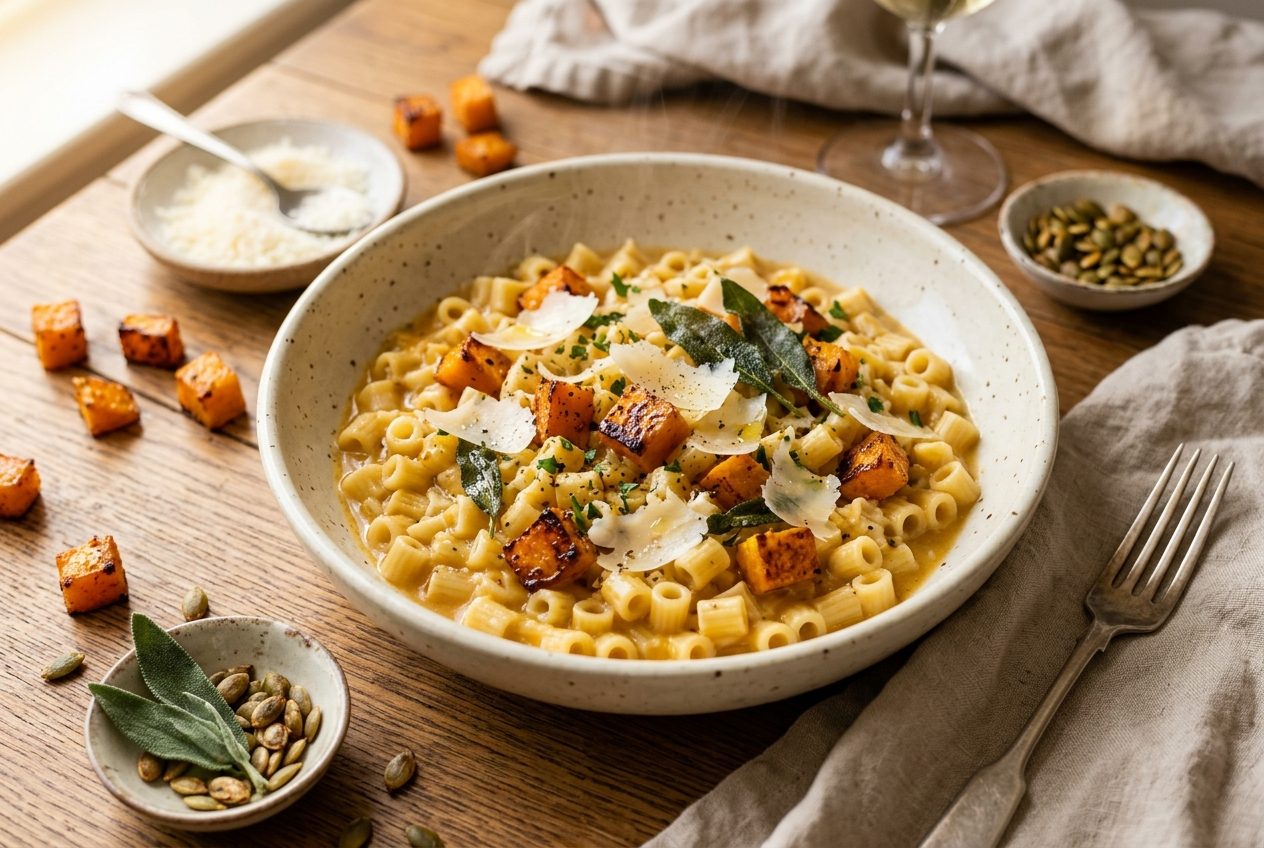
Cooking short pasta the way you'd cook risotto — adding warm broth a ladle at a time and stirring until the starch releases — turns it into a creamy, glossy pastasotto without a drop of cream. Half the squash roasts into caramelized cubes while the rest melts into the simmering broth, so every bite carries a double hit of sweet, nutty butternut. A final tumble of crispy sage and Parmesan gives it the depth that makes a 35-minute weeknight dinner taste slow-simmered.
Dinner · One-Pot, Vegetarian, Fall • 35 min
Nutrition (per serving)540Calories·18gFat·80gCarbs·16gProtein
Per serving. Values are approximate and calculated from USDA FoodData Central.
Ingredients
- For the squash:
- 1 small butternut squash (about 1½ pounds), peeled, seeded, and cut into ½-inch cubes (about 3 cups)
- 2 tablespoons olive oil, divided
- Kosher salt and freshly ground black pepper
- For the pastasotto:
- 4 cups low-sodium vegetable broth (or chicken broth), kept warm
- 3 tablespoons unsalted butter, divided
- 1 small yellow onion, finely diced (about 1 cup)
- 3 cloves garlic, minced
- 1 pound short pasta, such as ditalini, orzo, or small shells
- ½ cup dry white wine (optional; or an extra ½ cup warm broth)
- ½ cup freshly grated Parmesan cheese, plus more for serving
- ¼ teaspoon freshly grated nutmeg
- Kosher salt and freshly ground black pepper
- For serving:
- 8 to 10 fresh sage leaves
- Flaky sea salt, for finishing
Get Our Free 5-Ingredient Summer Dinners PDF
10 effortless recipes with 5 ingredients or fewer — delivered to your inbox, plus one thoughtful recipe every week.
Steps
- Roast the squash: Preheat the oven to 425°F with a rack in the center. Toss the squash cubes with 1 tablespoon of the olive oil, ½ teaspoon salt, and a few grinds of pepper on a rimmed baking sheet. Spread in a single layer and roast until deeply golden at the edges and fork-tender, 20 to 25 minutes, flipping once halfway through. Set aside.
- Warm the broth: Keep the broth in a small saucepan over low heat so it stays hot. Adding cold broth to the pasta slows the cook and makes the pastasotto gluey.
- Start the base: Melt 2 tablespoons of the butter in a 12-inch skillet or 5-quart Dutch oven over medium heat. Add the onion and cook, stirring, until soft and translucent, about 4 minutes. Add the garlic and cook until fragrant, about 1 minute.
- Toast the pasta: Add the pasta and cook, stirring constantly, until the pieces are coated in butter and slightly toasted at the edges, about 2 minutes.
- Deglaze: Pour in the wine (if using) and cook, stirring, until it's mostly absorbed, about 1 minute. If skipping the wine, add the first ladle of warm broth now.
- Simmer risotto-style: Add 1 ladleful (about ¾ cup) of warm broth and stir until mostly absorbed. Continue adding broth one ladle at a time, stirring frequently, until the pasta is tender and the sauce is creamy and glossy, 14 to 18 minutes. You may not need all of the broth.
- Finish: Stir in the roasted squash, Parmesan, nutmeg, and the remaining 1 tablespoon of butter. Season with salt and pepper to taste. Loosen with a splash of warm broth if needed — the pastasotto should flow slowly when spooned into a bowl.
- Crisp the sage and serve: Heat the remaining 1 tablespoon of olive oil in a small skillet over medium heat. Fry the sage leaves until crisp, about 30 seconds per side, then drain on paper towels. Spoon the pastasotto into warm bowls and top with the crispy sage, a pinch of flaky sea salt, and extra Parmesan.
Tips & Variations
Make Ahead
Roast the squash cubes up to 2 days ahead and refrigerate. The pastasotto itself is best made just before serving — it thickens as it sits — but you can prep the onion and garlic and measure the broth in advance. If you must get ahead, cook the pasta to just under tender, then finish with the broth, squash, and Parmesan right before serving, loosening with hot broth.
Storage
Refrigerate leftovers in an airtight container for up to 4 days. Reheat gently in a skillet over medium-low heat with a splash of broth or water, stirring until creamy again. The pasta absorbs liquid as it sits, so loosen it generously when reheating.
Substitutions
Swap the butternut squash for kabocha, delicata, or pumpkin purée (use 1 cup of canned purée stirred in with the broth). Any small pasta works — orzo makes it extra creamy, while small shells hold the sauce in their ridges. For a dairy-free version, use olive oil in place of the butter and a plant-based Parmesan alternative. Add a pinch of ground cinnamon with the nutmeg for extra warmth, or spoon chili crisp over the top for a spicy finish.
Nutrition
Per serving: About 1¾ cups
Reviews
Reviews coming soon! In the meantime, let us know what you think of this recipe.